

|| News Desk ||
The Bangladesh Nationalist Party (BNP) has significantly ramped up its campaign regarding the Teesta River water dispute, making “Save Teesta, Save People” its rallying cry. As depicted in a recent promotional image featuring a massive gathering illuminated by torches, the party is leveraging the emotive issue of the Teesta’s dwindling water to mobilize public support, particularly in the northern regions of the country.

Under its overarching principle of “Bangladesh First,” the BNP is positioning the Teesta water-sharing issue as a critical matter of national sovereignty, livelihoods, and environmental justice. The party blames the current government for what it describes as a persistent failure to secure Bangladesh’s rightful share of the river’s water from upstream, leading to severe economic and ecological distress.

Mobilizing the Masses for Teesta

The image released by the BNP Media Cell portrays a powerful visual of public dissatisfaction and calls for action. Such torch-lit processions and large assemblies are characteristic of mass movements aimed at drawing urgent attention to a cause. The BNP appears to be employing this imagery to:

  • Highlight Crisis: Underscore the gravity of the Teesta water crisis, which directly impacts the agricultural economy and lives of millions in North Bengal.
  • Galvanize Support: Unite various segments of society, including farmers, environmental activists, and local residents, under a common banner.
  • Political Pressure: Exert pressure on the government to prioritize the resolution of the long-pending water-sharing treaty with India.
|| News Desk ||
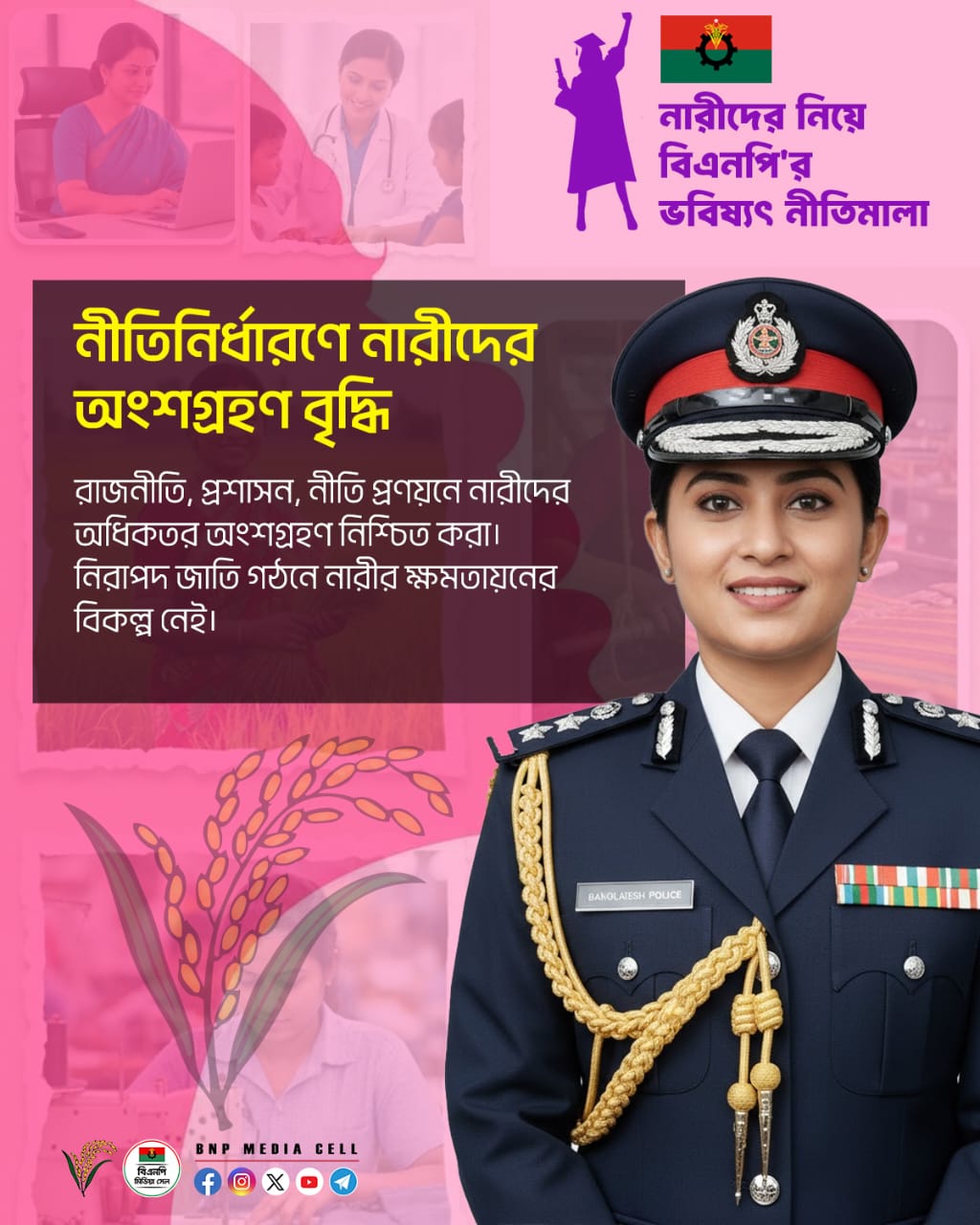
The Bangladesh Nationalist Party (BNP) has unveiled another crucial political commitment under its 31-point state reform program, focusing on significantly boosting women’s participation at all levels of national decision-making.

According to the leaflet released via the BNP Media Cell, the party promises to ensure greater participation of women in politics, administration, policy formulation, and security frameworks across the state.

The Core Commitment
The central theme of this new promise is to establish women’s empowerment as a non-negotiable foundation for building a safe and sustainable nation. BNP leaders argue that sustainable development is impossible without the active contribution of women, who make up half of the country’s population.

Political and Administrative Roles: The policy aims to increase the currently limited representation of women in political and administrative bodies, bringing more women into senior decision-making positions.

Influence in Policy: It seeks to ensure that women’s voices and influence are directly integrated into the process of drafting policies related to women’s rights, social security, and public welfare.

Security Structure: Participation of women in the police, military, and other security agencies will be expanded, allowing women to play a proactive role in safeguarding national security.

Discussion in Political Circles
Observers view this policy, alongside the previously announced ‘Family Card’ (economic empowerment), as a comprehensive effort to strengthen women both economically and politically.

|| News Desk ||
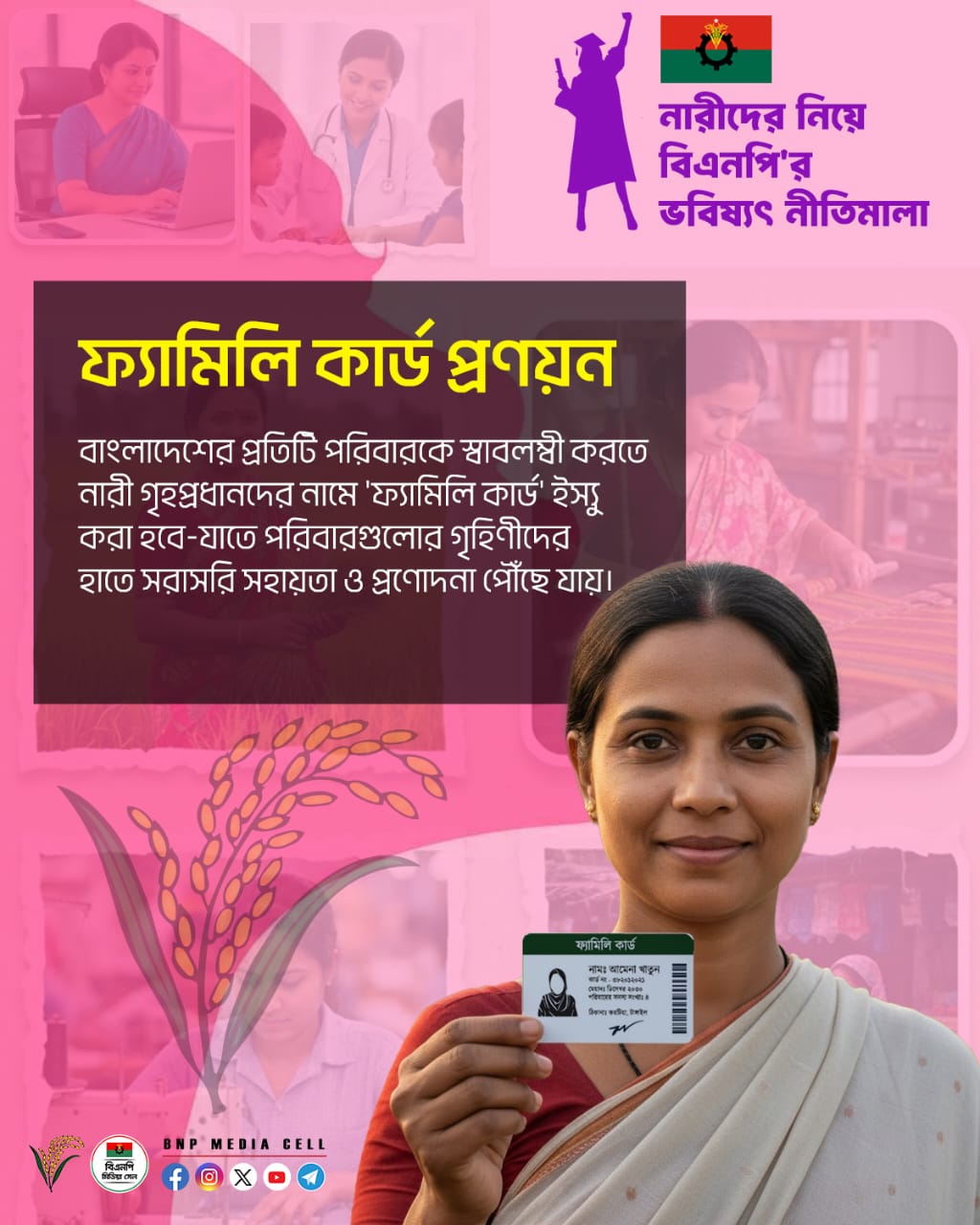
The Bangladesh Nationalist Party (BNP) has announced a significant policy initiative—the introduction of a ‘Family Card’ for every household—as part of its state reform agenda aimed at making every family self-reliant. Crucially, the party pledges that this card will be issued in the name of the female head of the household or the senior woman of the family, ensuring that future government aid and incentives reach the women directly.

BNP’s Acting Chairman Tarique Rahman and other senior leaders have consistently promoted the ‘Family Card’ concept in various rallies and virtual addresses as a cornerstone of their commitment to women’s empowerment.

Key Features of the Policy
According to BNP’s promotional materials and party sources, the main objectives of the ‘Family Card’ policy are as follows:

Women’s Empowerment: By issuing the card in the woman’s name, the policy aims to strengthen the decision-making authority of women within the family unit.

Direct Assistance: The card is intended to be the channel through which financial or food assistance from the state is delivered directly to impoverished and low-income families. This is expected to minimize interference from middlemen, ensuring benefits reach the genuine beneficiaries.

Food Security: The party has indicated that the initial focus of the program will be on ensuring food security for the underprivileged and grassroots families.

Non-Partisan Distribution: The BNP has stressed that the card will be distributed impartially to all eligible families, free from any partisan or political influence.

to top